
Kuznetsov Pavel Nikolaevich
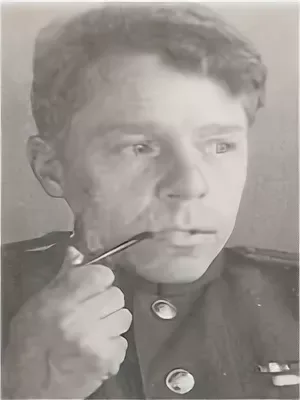
Kuznetsov Pavel Nikolaevich (1909-1967), writer Pavel Nikolaevich Kuznetsov, a talented publicist, prose writer, poet, and translator of the works of Kazakh poets, was born on August 9, 1909, in the village of Soldatovo, Mikhailo-Arkhangelsk volost of Ust-Kamenogorsk district, in a peasant family that had migrated from Ufa province. During World War I, the family moved to Ust-Kamenogorsk, and in 1924 they relocated to Semey city. Pavel Kuznetsov's professional career as a journalist began in the late 1920s at the newspapers "Novaya derevnya" and "Priirtyshskaya pravda." His rise was quick, dynamic, and bold; P. N. Kuznetsov traveled extensively along the Irtysh River. He could be seen in the new Shulba, then in Belagach, Shemonaiha, Ridder, and later at the construction of TurkSib. After that, his passionate reports, articles, essays, and feuilletons appeared in the newspapers: "Turkish Commissioner," "Patriarch from the Threshold of Uba," "Owners of Golden Roots," "Pine Bor," "Strikes of Construction Sites." At the age of twenty, Pavel Kuznetsov became the deputy editor-in-chief of the newspaper "Leninskaya smena" in Almaty. In the early 1930s, he worked in the editorial offices of "Kolhozная газета," "Volzhskaya kommunа," and the Kazan newspaper "Kyzyl Tatarия." In August 1935, Pavel Nikolaevich returned to Almaty and worked in the editorial office of the newspaper "Kazakhstanskaya pravda." He traveled extensively across the republic. He could be seen in the sugar beet plantations of Taldykorgan, in the Karatau mountains, in the steppes of the Balkhash and Semey Irtysh region, among the miners of Karaganda, and with the farmers and herders of southern and western Kazakhstan. In July 1941, P. Kuznetsov voluntarily joined the ranks of the Soviet Army, fought in the ranks of the Guards Panfilov Division, and became the first editor, journalist, and poet of the divisional newspaper "For the Motherland." On March 31, 1943, P. Kuznetsov was appointed as a war correspondent for the newspaper "Pravda." He worked there for over twenty years and became one of its most talented publicists. Pavel Kuznetsov left a significant legacy not only in journalism ("From Almaty to Berlin" (1945), "Great Friendship" (1948), "Hero of the Soviet Union I.V. Panfilov" (1948) collection of essays) but also in literature and literary criticism. His poetic collections include "Samorodok" (1937), "On the Banks of the Irtysh" (1940), "Soldier's Notebook" (1944), "Paths" (1946), "Notebook of the Road" (1962). P. Kuznetsov's significant contribution to literature was his introduction of the poet Zhambyl Zhabayev to the Russian reader. The appearance of Zhambyl's first poem in the pages of "Kazakhstanskaya pravda," translated by P. Kuznetsov, was a true celebration for readers. Soon after the first poem, new works by Zhambyl appeared: "Heroes of Our Homeland," "I Saw Kazakhstan," "I Am a Century-Old Tree," "Song About Life," and others. Pavel Kuznetsov not only translated Zhambyl's works but also accompanied him on many trips across the country. Their friendship and creative collaboration continued until the poet's last days. In one of the letters Pavel Kuznetsov wrote to the front, Zhambyl wrote: "You have become like a son to me." According to experts in Kazakh poetry, P. Kuznetsov's translations are close to the author's original both in ideological intent and in the structure of the verse, and therefore express the creative individuality of Zhambyl's poetics most accurately and organically. P. Kuznetsov also successfully translated the songs of other poets: Orumbai, Taizhan, Almbek, Karatay, Sartai. Close creative collaboration was established with T. Zharkov, I. Zhanсуgirоv, A. Tokmagambetov, K. Amanzholov, and other Kazakh poets. In 1950, P. Kuznetsov's first book was published, and in 1952, his second book was released. "Zhambyl - the Grandson of Istybay." In 1953, this novel was published under the title "A Man Finds Happiness." The novel depicts the awakening and formation of Zhambyl's talent, his consciousness shaped against the broad backdrop of life in the Kazakh steppe. Pavel Kuznetsov's life came to an end in 1967. On that day, his new artistic work titled "Flowers from the Past," about the first commune created by Petersburg workers in East Kazakhstan, was published in Almaty.